stories
on the brink of
extinction
brought to you by de herder of kleinood farm
A gathering place for folktales, anecdotes, legends, myths, and mysteries.
A written archive of stories to be enjoyed, pondered, revisited, and retold.
A movement dedicated to preserving tales of old for generations to come.
van Hunks and the Devil
How Table Mountain got its Tablecloth
& Devil’s Peak its name
A long time ago…
When Cape Town was only a few small houses at the foot of Table Mountain, there lived a retired seaman and his wife. Jan van Hunks had sailed the seven seas all his life and hoped to retire somewhere peaceful when he could no more. Weary from a life of adventure and hardship he wished only to smoke his pipe somewhere far away from the hustle and bustle of the modern world and, having visited Cape Town during one of his epic voyages, knew just the place.
The one thing Van Hunks had not planned on was his wife’s talkative nature and all the tasks she could think up every day. In the past, when not at sea, he’d quite enjoyed the break from the mundane hardships, relishing in her constant chatter and the domestic responsibilities she handed out. This all changed when he found himself no longer at sea for months at a time. The dreams of a slow life, with time to ponder long ponderings and smoke his pipe, melted into a nightmare of constant questions, endless gossip and a growing list of responsibilities to get round to. The brave sailor, van Hunks, did not feel safe on his own front porch and started planning an escape.
In those days the prominent peak to the east of Table Mountain was still known as “Windy Peak” for obvious reasons, and it was to this harsh landscape Van Hunks was drawn in his bid to escape the even harsher realities of domestic bliss. Starting out early in the morning, before the rooster woke up his wife, he’d grab his pipe and tobacco pouch and hike up the hill behind his house in search of peace and solitude.
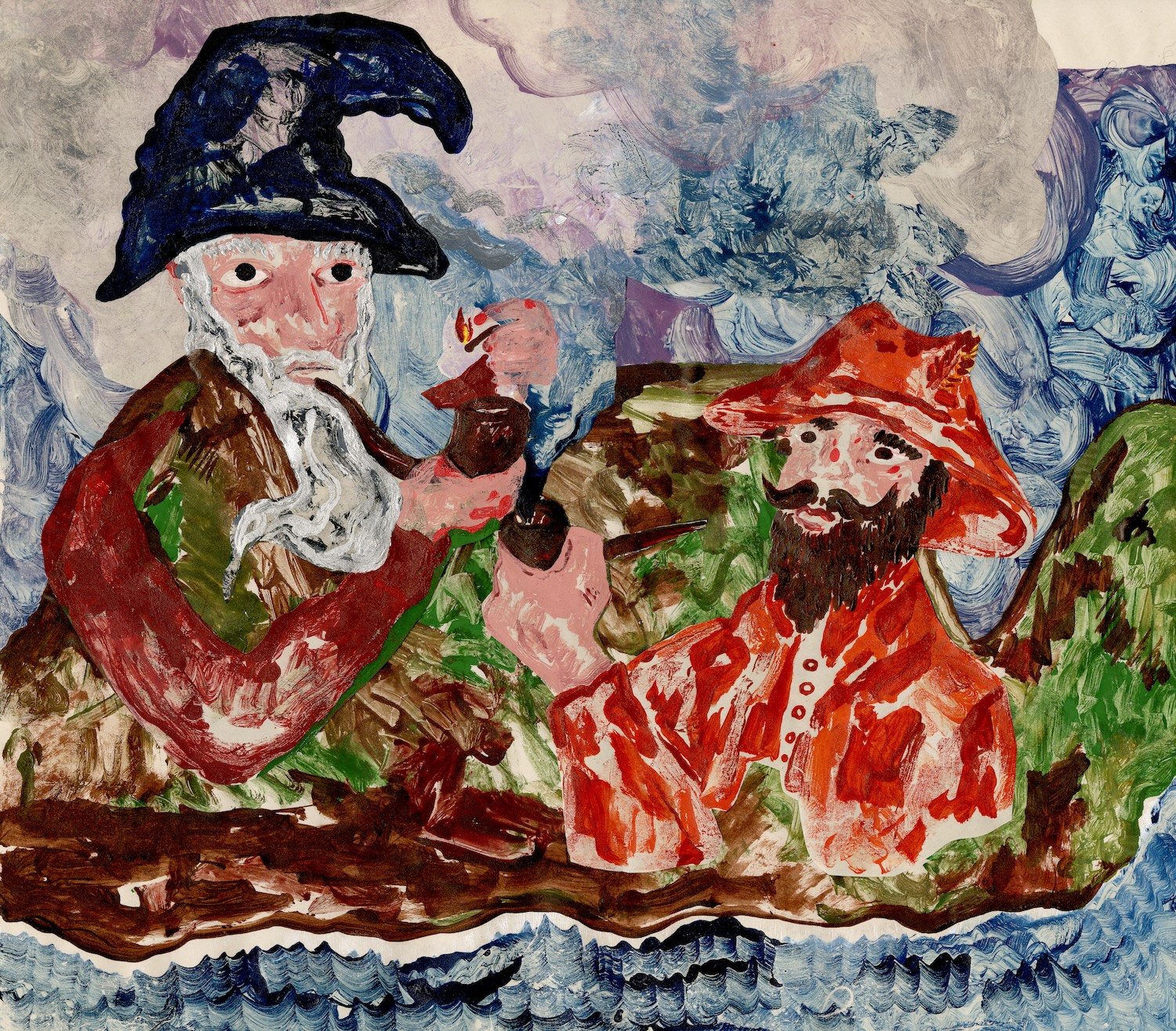
It was here, one day while smoking his pipe and minding his business, that van Hunks saw a strange looking character draw near. Wearing a pointy black hat and sporting a pointy black beard he look nothing like any of the faces van Hunks had seen around Cape Town since his arrival. The stranger moved with unsettling ease across the rocky terrain, his coat black as a moonless sea, his boots immaculate despite the dust. Van Hunks couldn’t quite say what colour his eyes were — they seemed to shift like oil on water, which van Hunks had seen plenty of at sea and had never trusted.
“Fine tobacco,” said the stranger, nodding at the fragrant cloud drifting between them. His voice was smooth and deep, the kind that makes a person agree to things before they’ve had time to think. This was the correct thing to say to Jan van Hunks. A man could insult his seamanship or question his navigation, and van Hunks might merely raise an eyebrow. But compliment his tobacco — Dutch, aged three years in a cedarwood box — and you had his full attention.
“I don’t suppose,” said the stranger, with what appeared to be casual curiosity, “that a man of your experience would be interested in a smoking contest? Whoever outlasts the other wins. If I win, I take your tobacco pouch. If you win, I’ll grant you whatever you wish.”
Van Hunks looked the stranger up and down: the pointy hat, the pointy beard, the boots that had no business being that clean on a mountain. He looked at his tobacco pouch — full and fragrant and three years in cedarwood — and something in the old sailor’s chest that had never quite learned to quit rose up and made the decision for him.
“Right then,” said van Hunks. “Let’s smoke.”
What followed was perhaps the greatest smoking contest the world has ever seen, though the world was not there to witness it.They smoked through the morning while the sun climbed the sky. Van Hunks’s pipe sent great rolling clouds of cedar-scented smoke billowing up from the peak, and the stranger matched him puff for puff, his own smoke darker, with a faint smell van Hunks associated, vaguely, with singed paperwork. The cloud above them grew enormous, thick and white as fresh sailcloth, tumbling over the edges of the peak and down toward the bay.
Van Hunks did not flag. This was a man who had smoked through Atlantic gales, through the doldrums, through harbour quarantine and his wife’s cousin’s wedding, which had lasted four days and featured no fewer than seven speeches. He was not a man who could be outsmoked.
By sunset, the stranger’s composed exterior had developed, around the edges, something that in a mortal man might be called strain. And then, as the first stars appeared, his pipe went out. He stared at it with the expression of a man who has not been surprised in a very long time and is not sure he cares for it.
Van Hunks took one long, final, triumphant puff. “I believe,” he said pleasantly, “that I won”. The stranger stood, straightening his coat with the dignity of someone who has practiced losing gracefully but rarely had occasion to use the skill. “What do you wish?” Van Hunks considered. He could have wished for gold, a fast ship, or a house larger than his current one, which his wife had already identified several structural concerns with. Instead he gestured broadly at the mountain around them.
“I wish for this peak to be known forever as Devil’s Peak,” he said, “so that anyone who looks up and sees the cloud upon it will know that once, up here, a sailor beat the Devil in a smoking contest.” The Devil — for that is what was now confirmed — studied him with an expression walking the fine line between offended and impressed. “That is an extremely modest wish,” he said. “I’m a modest man,” said van Hunks, which wasn’t strictly true, but he said it with such conviction that it almost became so.
The Devil departed down the far side of the mountain, and van Hunks descended home in time for supper. He said nothing to his wife about the afternoon’s events, partly because he was a private man, and partly because she was mid-way through a detailed account of what the neighbours’ dog had done to her herb garden.
But from that day forward, the peak was called Devil’s Peak. And whenever the southeaster blows and the great white cloud comes rolling over Table Mountain, settling like a cloth over its flat summit, the old Capetonians will tell you what it really is — the smoke from the pipes of van Hunks and the Devil, who some say still meet on the mountain to settle the matter of a rematch the Devil has been requesting, with increasing insistence and decreasing dignity, ever since.
Van Hunks, by all accounts, has not yet agreed. He is, after all, a busy man — and his wife has a great deal of things that need attending to.
The End
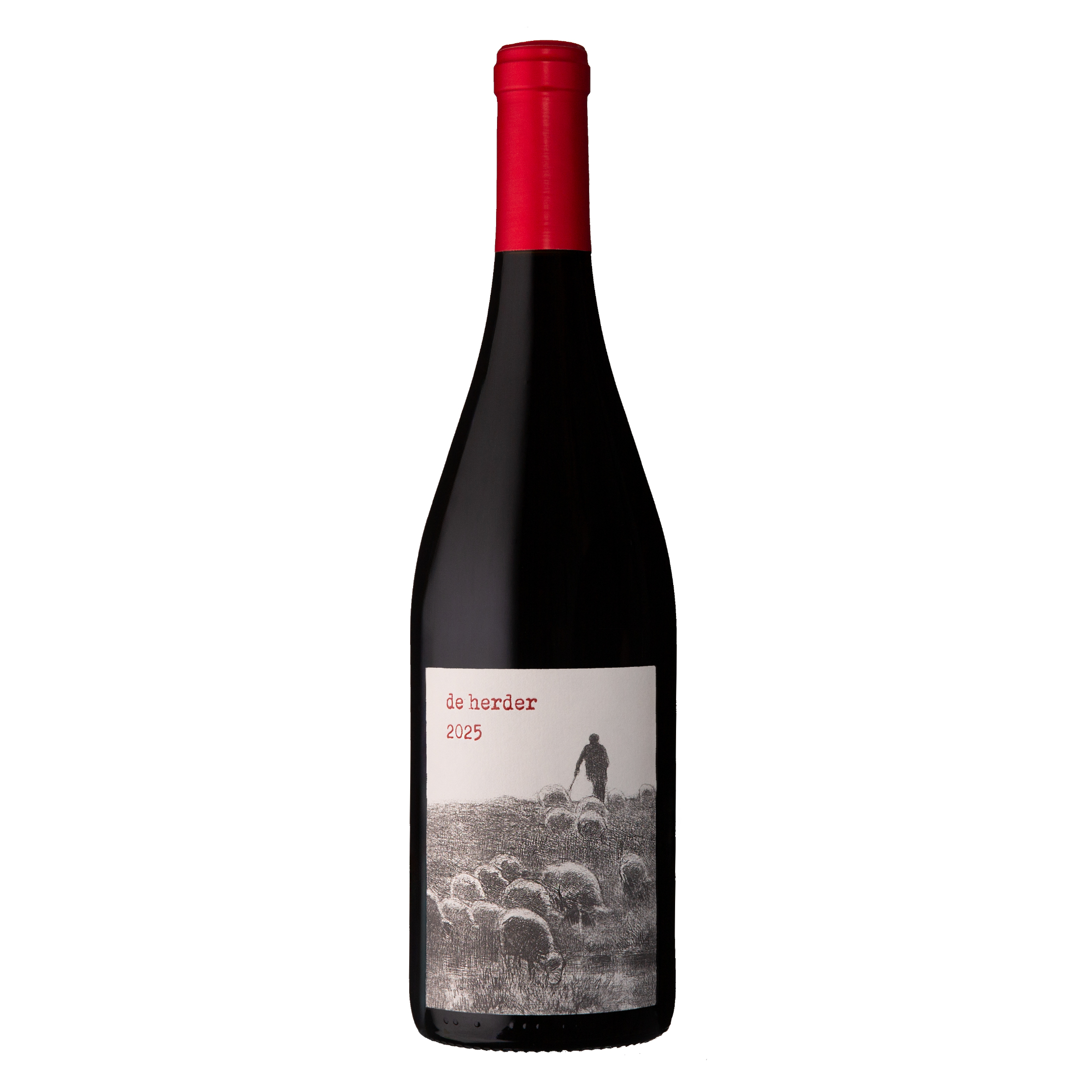
Kleinood de herder Rhône Blend
de herder = the shepherd, the one who patiently walks the hills and valleys in search of the best grazing for his flock.
Inspired by this sacred and ancient practice, we searched the rugged mountain folds of Stellenbosch for select parcels of vineyard to bring you, our flock, an expressive Rhône blend made on Kleinood Farm.
The 2025 blend
Syrah 76% (Stellenbosch)
Cinsault 17% (Stellenbosch)
Mourvèdre 7% (Stellenbosch)