
A short while ago Tom Wark posted an interesting new letter on the Fermentation blog. The title, In Praise of Colonisation, was rather audacious and came as quite a surprise.
His opening paragraph, “Imagine a world without Sonoma Coast Pinot Noir? Or Argentine Malbec. Imagine no New Zealand Pinot or Sauvignon Blanc. Now erase Australian Shiraz. Embrace the notion of no Napa Cabernet Sauvignon. Now, let us shed a sigh of relief and praise colonisation. Yes, colonisers the world over have engaged in some nasty acts. History is long, and if we look back 500, 1,000, or 2,000 years, we can witness a panorama of nastiness across the globe.”
His closing sentence, “And this is where I’m willing to say, three cheers for colonisation! (and invasions)” got us wondering whether he would have said it under the current circumstances. It is both an interesting and dangerous statement to make.
The craft of making wine was most definitely spread by Europeans. In Napa, Chili, Argentina and Mexico, Spanish missionaries started making wine in the 16th century, primarily to produce sacramental wine for Catholic services. Canada was occupied by the French, Australia and New Zealand were colonised by the British, Portuguese colonists introduced wine making to Brazil, with the first, albeit unsuccessful, attempts starting around 1532.
Early colonial efforts were limited by unsuitable conditions and trade restrictions, but later, Italian and German immigrants significantly established the industry in southern Brazil during the 19th century. In Japan Jesuit missionaries initiated wine making in the 16th century, with industrial production beginning in the 1870s under Japanese government efforts. The South African wine industry gave its first steps long before being colonised by the British.
It is totally acceptable and correct to refer to the diasporic nature of people and how, by misfortune and basic needs, knowledge was spread. It is intriguing to see how cultures merge and change and how we learn from one another. It is part of the wonder of wine to see how two of the same plant cultivars can perform so differently when the terroir changes. But thanking colonisation and invasion, under any circumstances, is neither accurate nor acceptable.
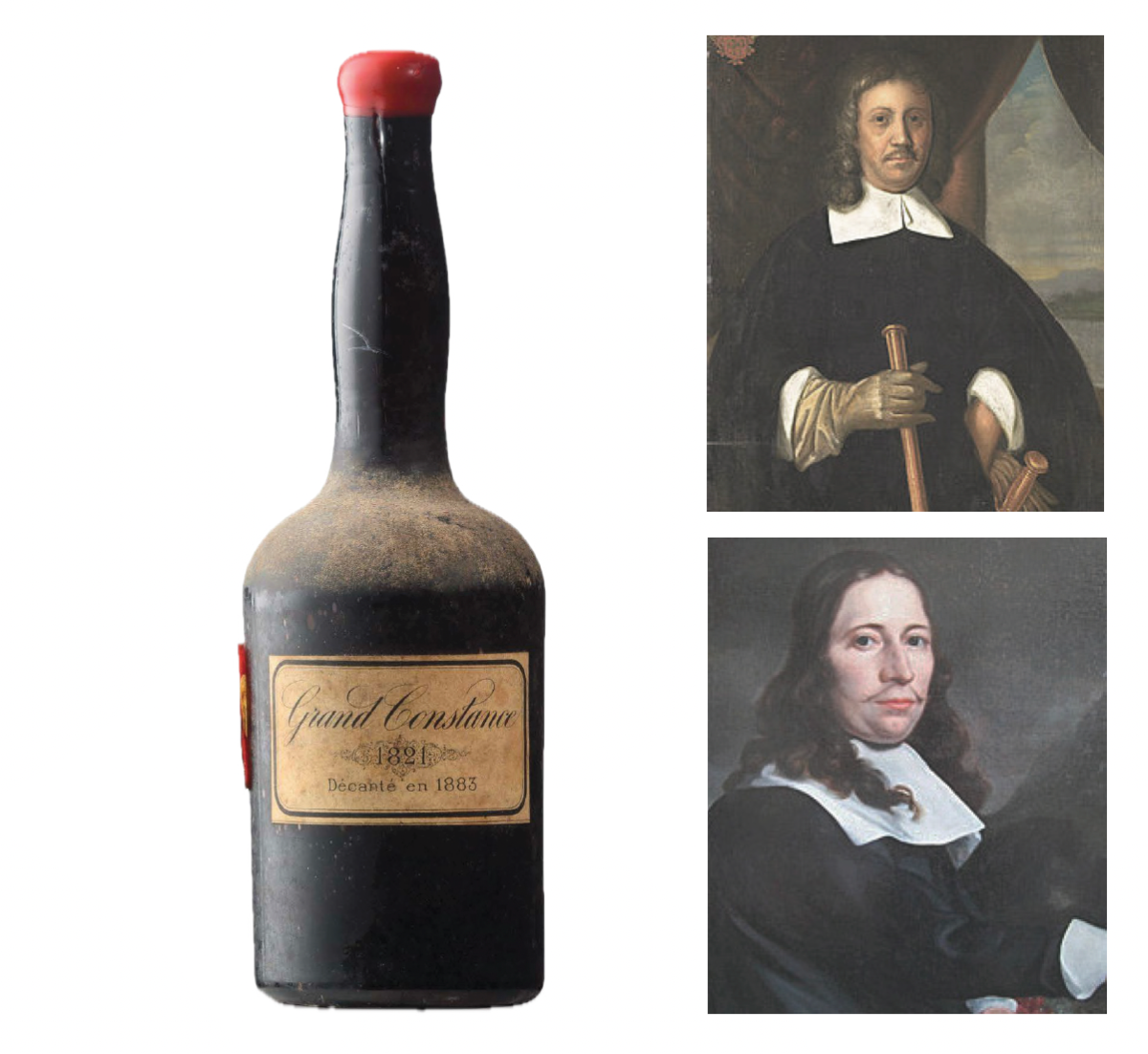
Wine was first produced in South Africa by Jan van Riebeeck, in 1659, and by the mid-18thcentury Constantia, owned by Simon van der Stel, produced ‘Grand Constance’ from Muscat de Frontignan (Muscat Blanc à Petits Grains), which was very sought-after by European royalty.
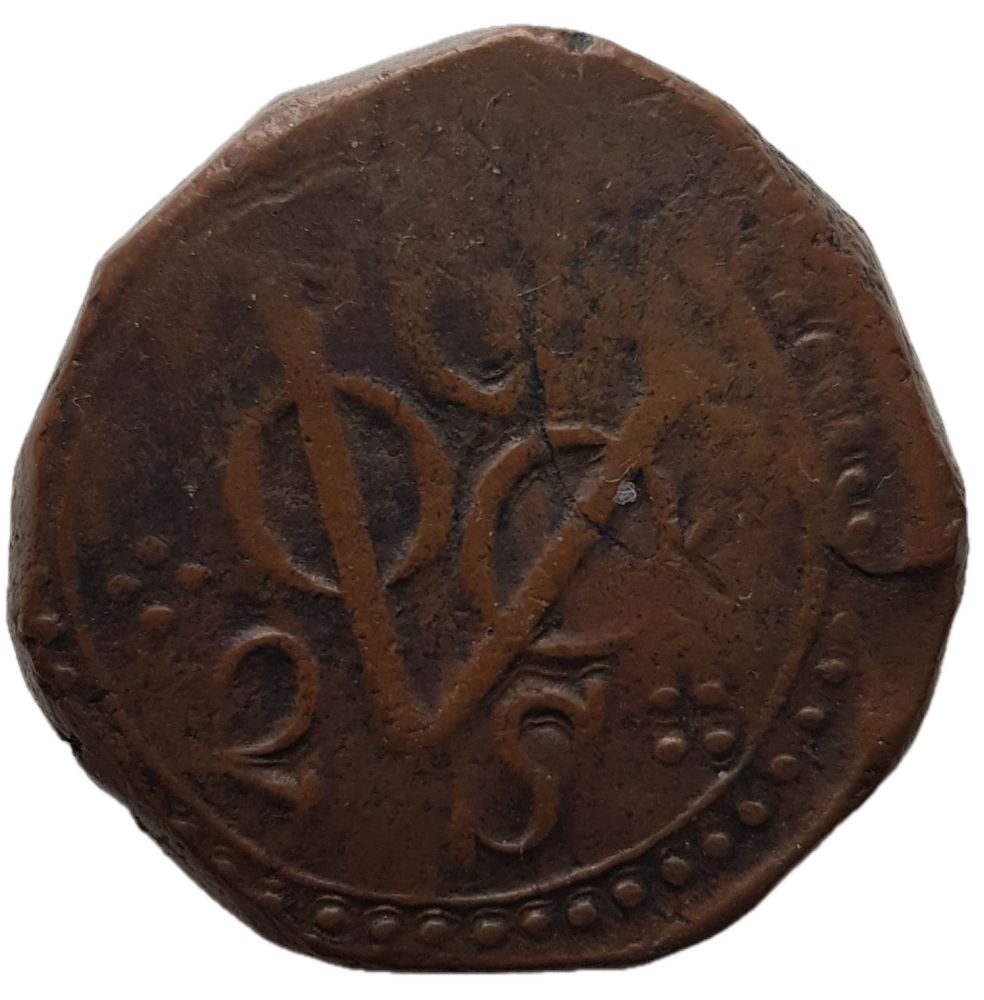
Cape Town was founded by the Dutch East India Company or the Vereenigde Oost-Indische Compagnie (VOC) in 1652 as a refreshment outpost. Thus the VOC and not the Dutch were interested in establishing a re-provisioning station at the Cape of Good Hope so they could supply their trade ships with food to enable their wearied sailors to recuperate.
However, the South African wine industry was developed by French religious refugees who brought their knowledge and traditions to the Cape of Good Hope with the arrival of the group of Protestants, known as the French Huguenots who arrived in 1688.
The term, Huguenots, was commonly used by the mid-16th century to describe French followers of John Calvin (Calvinists). At this time, wars of religion raged in France between Protestants and Roman Catholics from 1562 to 1598.
The spread of French Calvinism and the tolerance shown by the then French ruler, Catherine de Médicis, angered the powerful Roman Catholic church. With the Massacre of Saint Bartholomew’s Day on 24 August 1572, carried out by Roman Catholic nobles and other citizens, around 3,000 French Protestants (Huguenots) were murdered in Paris, with around 20,000 massacred across the rest of France. The bloodbath renewed hatred between Roman Catholics and Huguenots and the civil war resumed.
On April 13, 1598, the new king, Henry IV, signed the Edict of Nantes, which confirmed Roman Catholicism as the state church, but granted a large measure of religious freedom to Protestants.

The Edict of Nantes ended nearly 40 years of religious strife and civil war that had left France tottering on the brink of disintegration. The edict, accompanied by Henry IV’s own conversion from Huguenot Calvinism to Roman Catholicism, brought an end to the violent Wars of Religion that began in 1562.
The controversial edict was one of the first decrees of religious tolerance in Europe and granted unheard-of religious rights to the French Protestant minority. Cardinal de Richelieu, who regarded its political and military clauses as a danger to the state, annulled them by the Peace of Alès in 1629. In 1685, Louis XIV formally revoked the Edict of Nantes.
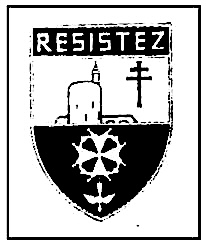
The Netherlands acted as a major hub for refugees, with significant numbers of pastors, craftsmen and soldiers settling there. Many of these refugees were farmers and, as the Dutch climate did not allow farming as they knew it, the VOC facilitated the immigration of French Huguenots to the Cape of Good Hope. In all fairness one should add that the VOC needed farmers and wanted to grow the population for tax purposes. Roughly 200 settlers representing roughly 1/8 of the early settler population, arrived in 1688.
These families were settled mostly in the Drakenstein, Wellington and Franschhoek areas, where they faced severe challenges, including harsh conditions, unfamiliar terrain, and lack of resources.
Most of the refugees arrived at the Cape with empty hands. Unlike some of the French refugees that fled to other countries such as Germany, the Netherlands and England, those that came to the Cape, with the exception of a few, were in fact very poor people.
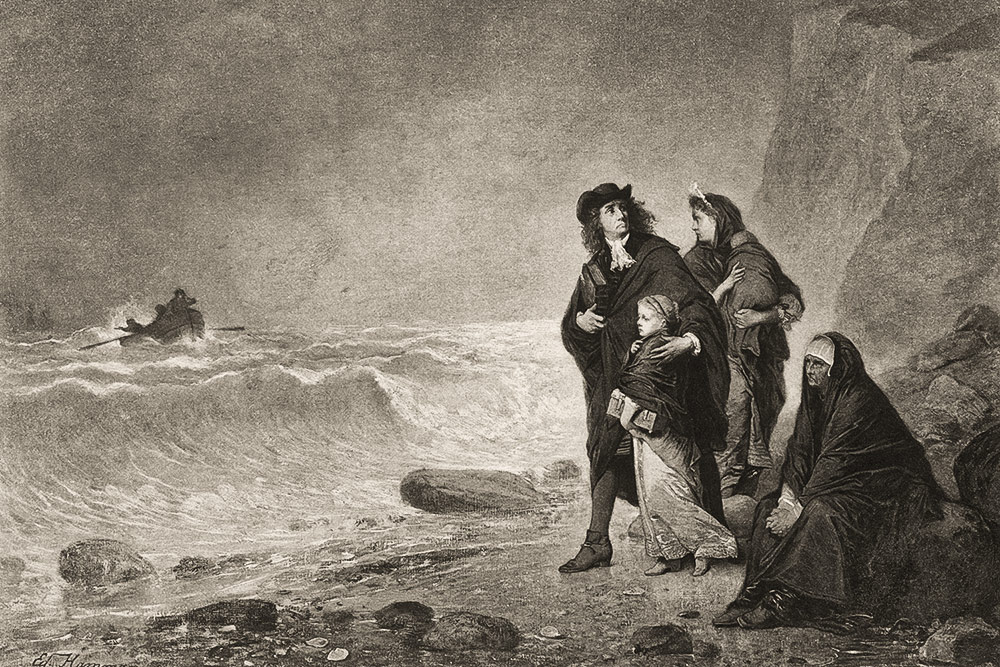
Franschhoek
Thomas Pringle
(1824)
To this far nook the Christian exiles fled,
Each fettering tie of earthly texture breaking;
Wealth, country, kindred, cheerfully forsaking,
For that good cause in which their fathers bled.
By Faith supported and by Freedom led,
A fruitful field amidst the desert making,
They dwelt secure when kings and priests were quaking,
And taught the waste to yield them wine and bread.
And is their worth forgot? Their spirit gone?
Now, in the breach of wickedness forth-breaking,
At the lone watchman’s warning call awaking,
To lift the faithful standard is there none?
Yes — still ‘mong the dry bones there is a shaking,
And a faint glimmering still where former lustre shone.

At the turn of the 17th century, the Lords XVII in Amsterdam paved the way for free farmers to take up viticulture. These included the 159 French Huguenots who, with their skills, knowledge and secrets of wine making they possessed at their arrival, allowed them to produce better quality wines more productively than the non-French settlers.
The Cape was officially invaded and colonised for the first time in 1795 by the British. The now Cape colony was under British rule until 1803 when it was handed back to the Dutch. When war between the British and French broke out once more in 1806, the British permanently occupied the Cape Colony.
So where does this take us in terms of colonisation and invasions producing so-called New World wines? At best it is as a result of geo-political upheaval – religious wars, new transit routes, wars and power struggles in Europe. In most of these countries the industry was started with knowledge that came not with the colonisers, but by immigrants, missionaries and refugees. The labour which shaped these vineyards and industries were mostly indigenous peoples of those areas.
Are Old World wines the result of colonisation by the Ancient World? Vines for wine making purposes are now planted in Tanzania and Rwanda. What would they be? As for the definition of old versus new, it is a very arbitrary term – if wine was exported from South Africa to Europe in 1685, it is hardly new, but it is a very handy marketing concept.

The non-politicised differences between Old World and New World wines lies in the subtle but distinct approaches and philosophies concerning the growing and making of wine.
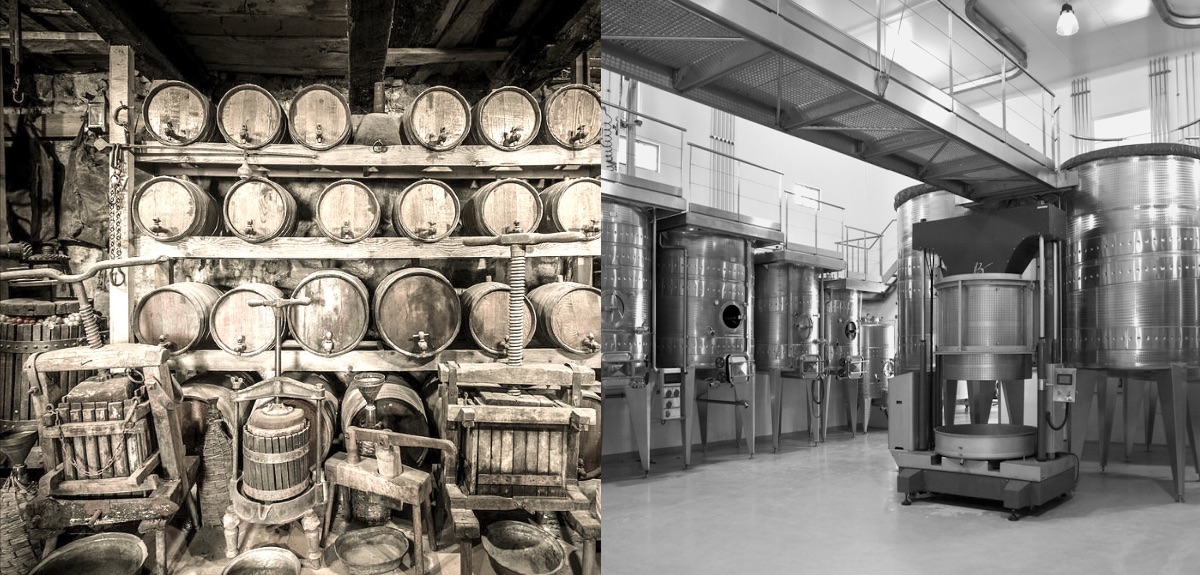
There is as little difference in the cultivars planted and the wine-making process as there is from one local wine producer or wine maker to the next. Old World winemakers would typically be working under strict viticultural and wine making regulations – what cultivars can be planted where, planting densities, grape yields per hectare etc, and what equipment such as presses and extraction methods may be used. All under the “Terroir” and “Traditional” banners.
New World producers have much more freedom and can experiment with non-traditional grape cultivars and farming methods that are not region bound, and they are allowed more innovation and scientific wine making methods.
Here, however, South Africa is alone in that it is geographically New World but possesses many Old World roots. Because our wine making history dates so far back and developed by the French Huguenots with their Old World methods, we have strong Wine of Origin controls very similar to the French system.
Terroir always plays an enormous role in the production of wine and terroir in any of the New Wine worlds differs largely from the Old Wine terroir, but then a case could be made that Tuscan terroir differs from Rhône terroir, or Burgundy from Rioja.
The result of these differences is that the wine styles differ. The Old World wines would typically be lighter with lower alcohol levels and would have more subtle fruit and savory expressions, while the New World wines would often be bolder with up-front fruit, softer acidity and higher alcohol. However, that too differs from area to area within these regions.
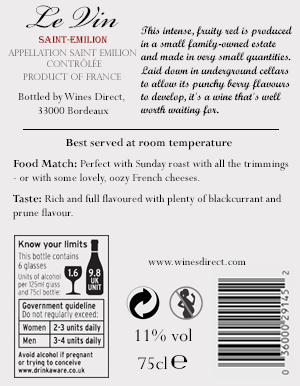
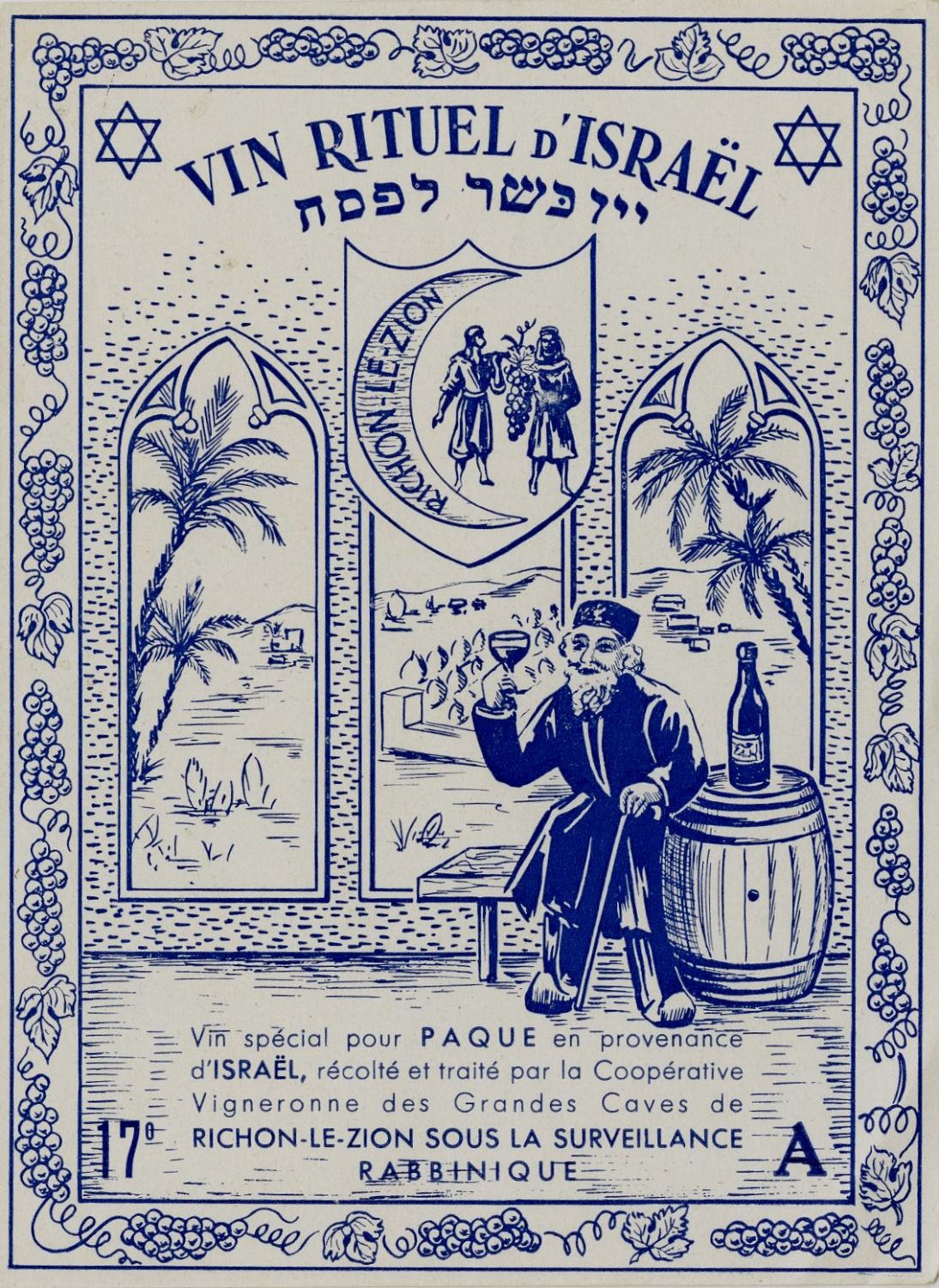
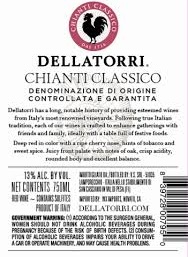
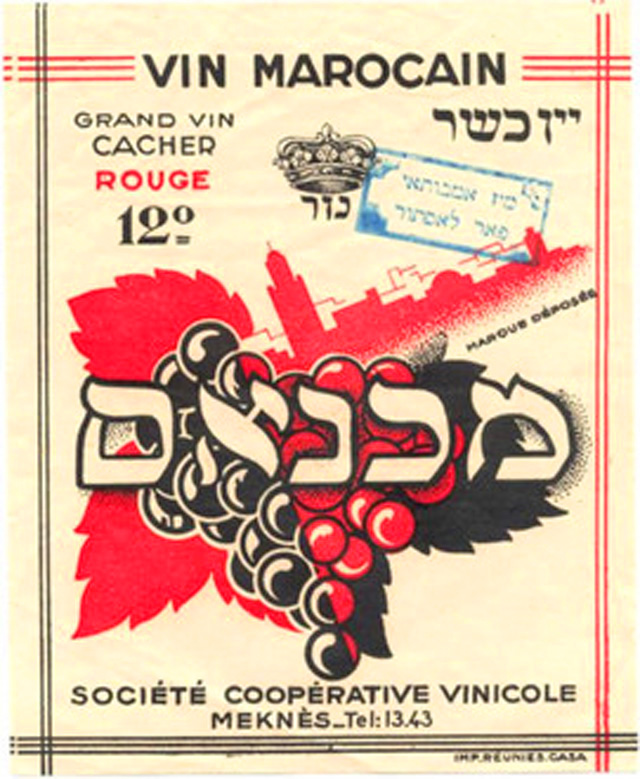

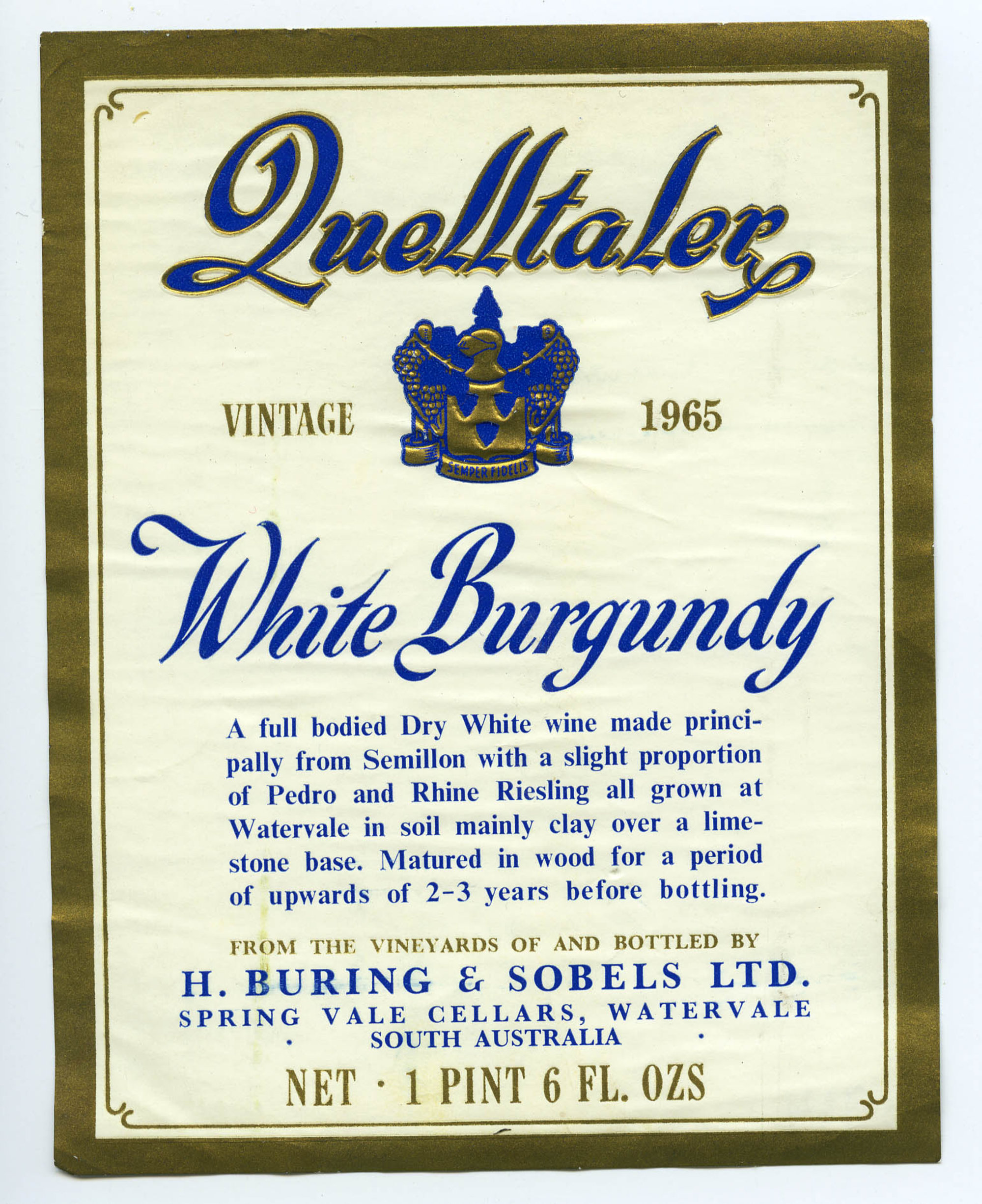
Labelling of wines used to be very different. In France there was surprising little information on the labels in contrast with the abundant information on the labels of New World wines, which is mostly enforced by European regulators. These days the back labels have very much been standardised in terms of information world wide, with small regulatory differences from country to country.
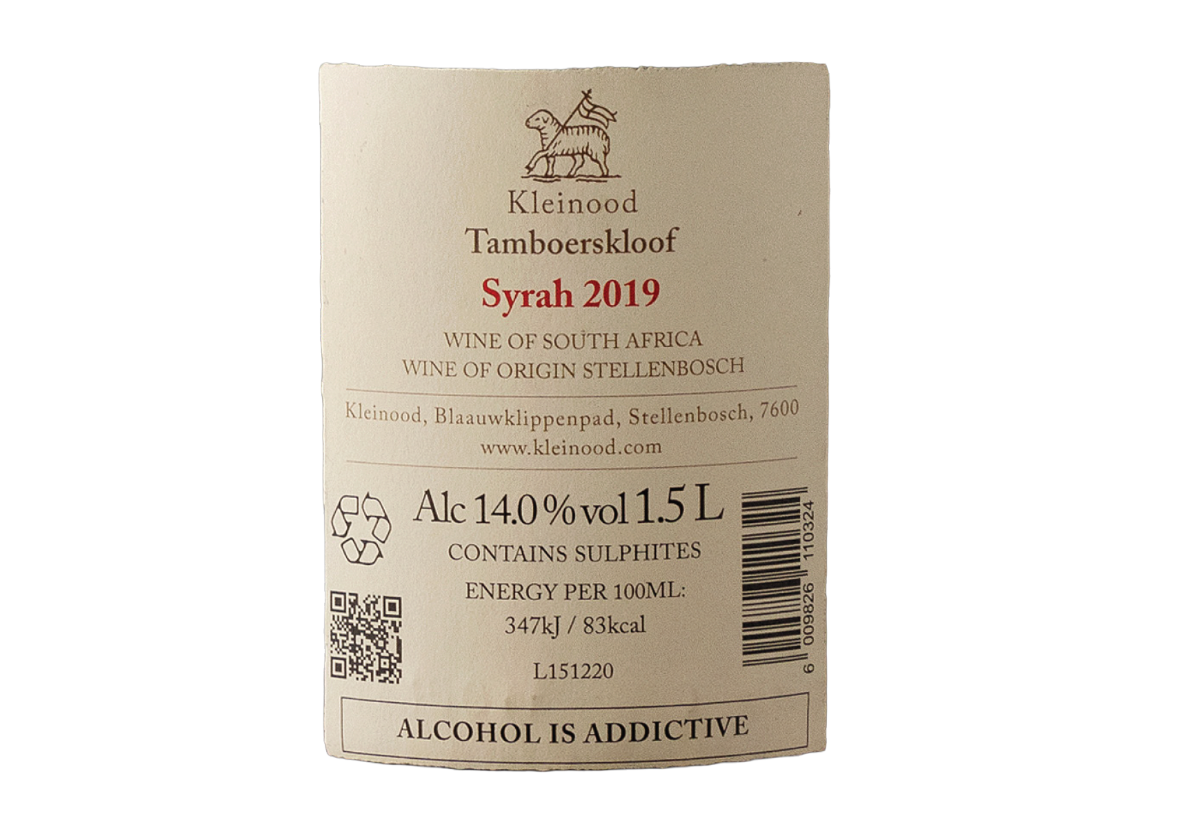
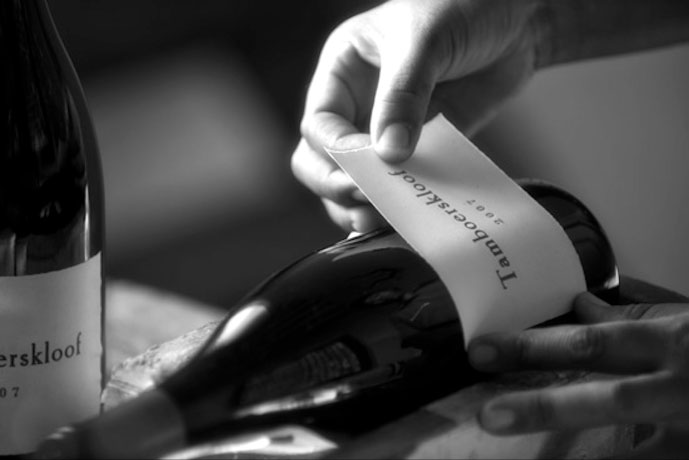
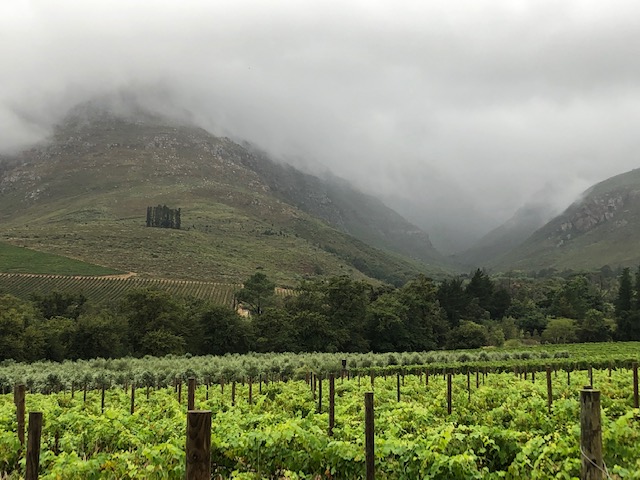
The Kleinood decision to embrace the Old World approach when we planned the farm and the winery, was terroir driven with many soil tests and micro-climate analyses done which showed similar terroir to the northern Rhône.
At the time there were only a few New World Shiraz clones available, and we imported 4 French Syrah clones that we grafted onto our local root stocks.
In the winery itself we use natural yeasts for fermentation, make use of traditional winemaking methods such as hand picking and sorting of grapes, soft handling using gravity instead of pumping and finally pressing the grapes in a traditional French basket press.
As such the Tamboerskloof Syrah will always have one leg in the Old World and the other in the New World. Not because we were colonised, but because it is a meaningful and sensible way to farm this land.
Vive la différence!


