stories
on the brink of
extinction
brought to you by de herder of kleinood farm
A gathering place for folktales, anecdotes, legends, myths, and mysteries.
A written archive of stories to be enjoyed, pondered, revisited, and retold.
A movement dedicated to preserving tales of old for generations to come.
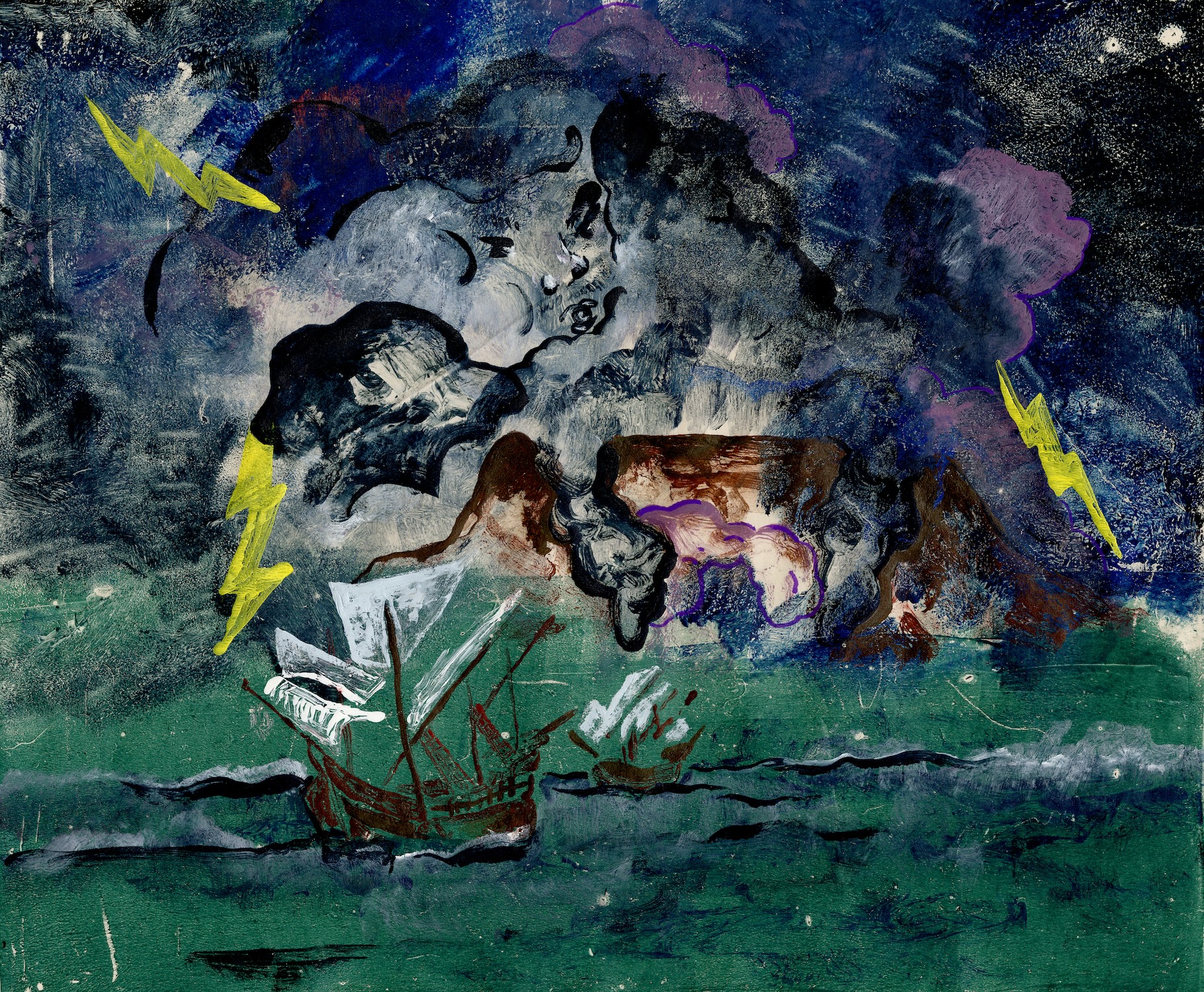
Table Mountain and the Legend of the Querulous Giant Adamastor
This story starts before the beginning of time as told by the ancient Greeks…
Uranus, meaning “sky” or “heaven”, was their greatest god, and his wife was Gaea, or Gaia, meaning “land”, or “earth”. Uranus and Gaia had many children, amongst them the twelve Titans who ruled the earth. One of these Titans was Cronus, who later fathered Zeus.
For eons the Titans ruled earth and all it held with an iron fist – using tyranny and fear to control the wills and ways of their minions. Zeus, having been crowned king of the gods and with the aid of two of his brothers, Poseidon and Hades, started a long and bloody war with the Titans.
After many long years of fighting they overcame the Titans and banished them to three separate far-flung corners of earth. One such place was the dark and gloomy underworld of Tartarus. The second was a British Island in the far west. Lastly a Titan named Adamastor was sent to the southernmost end of the earth, to Table Mountain.
We pick up this story as told by 16th century Portuguese poet Luís Vaz de Camões, still considered the greatest Portuguese poet of all time:
After a few hundred years of being locked away Adamastor was getting frustrated. There he was, a strong giant once feared and revered, now confined to a windswept, rocky outcrop covered in fynbos and not much else! So Adamastor, to give some purpose to his days, decided to do something good for once. He decided to take up the responsibility of protector – guarding not only the Cape he’d been banished to, but also the entire continent of Africa.
It was around this time Portuguese navigators, led by the infamous Bartolomeu Dias, first decided to sail down along the west coast of Africa towards the Cape. From his vantage point atop Table Mountain Adamastor saw them arrive but did nothing – biding his time knowing full well theirs would come.
The brave Portuguese sailed on through unknown waters, further south than they’d ever floated before as they approached the southernmost tip of Africa. Adamastor grumbled in disdain, crossing his arms. Who were these new visitors, he wondered. And could they be trusted? He grunted his discontent, and a strong wind started blowing. Still the ships sailed on, sails billowing.
With provisions running low they eventually attempted to approach land in search of fresh fruit, vegetables, and water. To Adamastor this was crossing the line and he summoned a storm. Massive waves and gale force winds swept in, beating the fleet back. In the face of such adversity Dias was forced to admit defeat, turn around and head back to his homeland. Adamastor smiled to himself, but knew they’d be back…
Adamastor was not wrong and it was but a few years later that another Portuguese navigator, Vasco da Gama, decided to attempt the same voyage. As his fleet approached the Cape, Adamastor again summoned a great and powerful storm. Seeing the storm brewing on the horison, Vasco da Gama had to make a plan – and fast! He weighed up his options. Running for cover closer to the shore could lead to his boats being driven onto the treacherous coastline by tempestuous waves and howling wind. Sailing out to sea, away from sharp rocks and shallow sandbanks, could very well land him and his fleet smack-bang in the heart of the storm.
Da Gama was a seasoned captain, as brave as he was wise. When Adamastor raised the winds, he lowered his sails. When Adamastor sent giant waves, he kept speeding on, all the time making sure he kept the land to his left and maintained his original course. A great battle ensued, as Da Gama duelled it out with the worst Adamastor could throw at him. Storm after storm pummelled the Portuguese fleet, terrifying the sailors on board who knew they’d reached the infamous and dreaded Cape of Storms where Bartolomeu Dias had been forced to turn around only a few years before.
More than brave and stubborn, Da Gama was also very clever. Standing at the prow of his ship, in the heart of the storm, he called a meeting with Adamastor to broker a deal. He promised Adamastor a better name for Adamastor’s domain in return for safe passage. Knowing a more attractive name would bolster the value of his fiefdom, Adamastor obliged. A deal was struck and the Cape of Storms became known as the Cape of Good Hope, attracting visitor from the world over. Da Gama sailed on to reach India, establishing the first oceanic trade route between Europe and the East. And Adamastor got to keep his large kingdom, to protect to this day.
The End
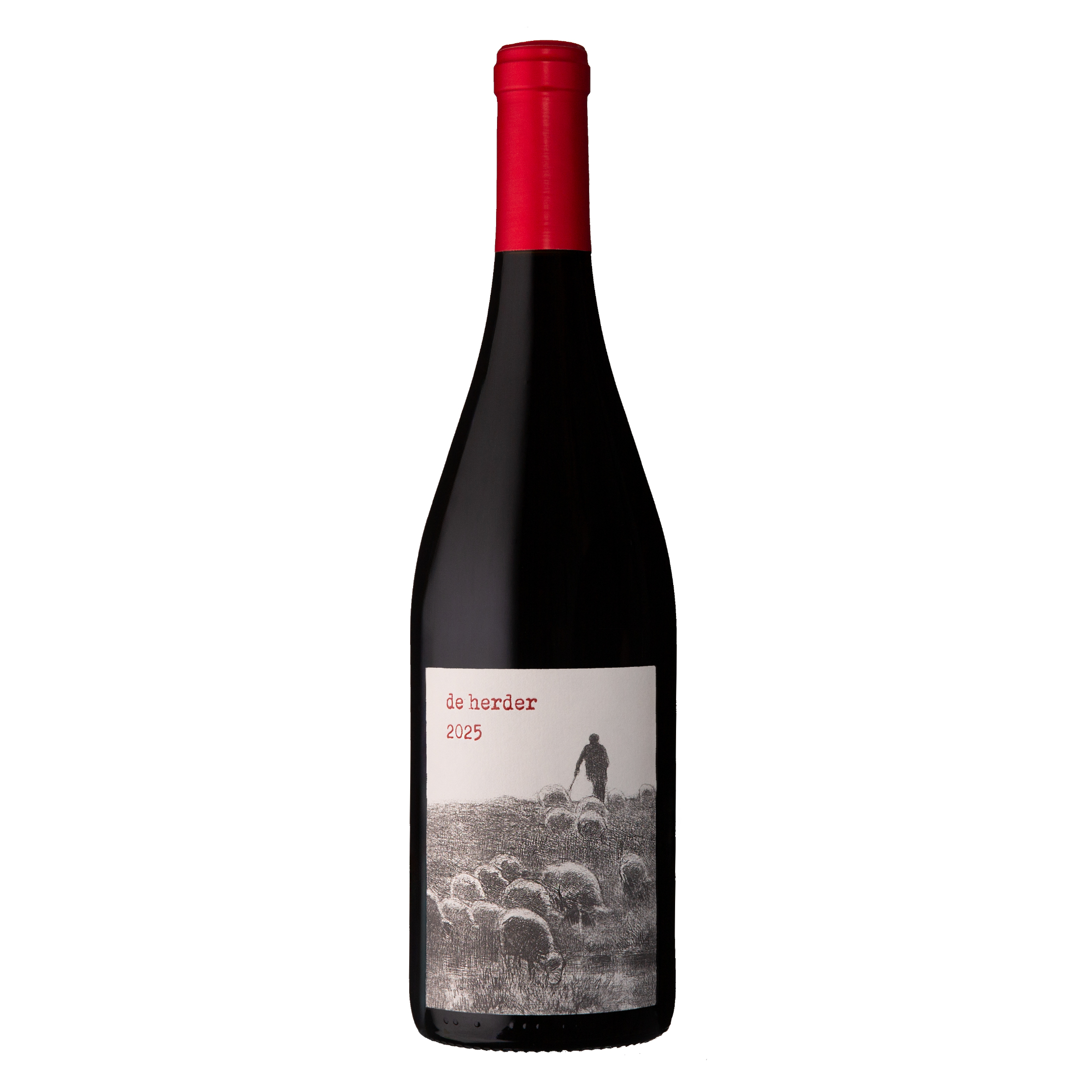
Kleinood de herder Rhône Blend
de herder = the shepherd, the one who patiently walks the hills and valleys in search of the best grazing for his flock.
Inspired by this sacred and ancient practice, we searched the rugged mountain folds of Stellenbosch for select parcels of vineyard to bring you, our flock, an expressive Rhône blend made on Kleinood Farm.
The 2025 blend
Syrah 76% (Stellenbosch)
Cinsault 17% (Stellenbosch)
Mourvèdre 7% (Stellenbosch)